
Auto parts maker Sona BLW Precision Forgings (Sona) reported strong revenue in the fourth quarter of financial year 2023-24 (Q4FY24) as demand for electric vehicles expands. The company reported a 19 per cent year-on-year (Y-o-Y) increase in sales to beat street estimates. Sales were powered by a 34 per cent growth in the battery electric vehicle (BEV) segment and a good show in the differential gear segment.

Six months after its India debut, the Vietnamese automaker has overtaken established players such as Hyundai Motor, BMW, Kia, and Chinese EV major BYD.

The Delhi government has approved the Delhi EV Policy 2.0, which will phase out fresh registrations of internal combustion engine (ICE) two-wheelers and three-wheelers over the next two years, starting with a ban on ICE 3Ws and N1 category LCVs from January 1, 2027, and ICE 2Ws from April 1, 2028.

Despite the ongoing West Asia conflict causing global trade route disruptions, Mercedes-Benz India reports resilient customer demand, particularly for its new electric CLA sedan, though it faces challenges with component supply delays and escalating shipping costs.
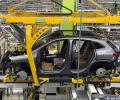
India's total automobile retail sales recorded a significant 9.55 per cent year-on-year growth in May, reaching an all-time high of 25,31,067 units, driven by strong performances in three-wheelers, passenger vehicles, and tractors, despite prevailing heatwave conditions and fuel price pressures.
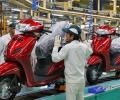
Honda Motorcycle & Scooter India (HMSI) plans to create over 3,800 jobs and expand its annual two-wheeler production capacity to 80 lakh units by 2028, reinforcing India's role as a global manufacturing and export hub for Honda.

EV manufacturers point out that converting a regular petrol car into a flex-fuel vehicle requires only about Rs 17,000-25,000 per unit, whereas developing an EV demands vastly greater investments in research, battery development, and localisation.

The luxury carmaker plans to drive growth through local assembly of the MINI Countryman, expansion into 10 new cities and a broader product portfolio.
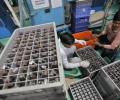
Escalating geopolitical tensions in West Asia are beginning to disrupt India's automotive supply chain, leading to rising commodity prices, logistics bottlenecks, material shortages, and pressure on consumer demand, with two-wheeler makers already raising prices.

'... that work is done. The task is to reallocate what has been built, with the courage of a founder and the discipline of an owner.'

India's automobile retail sales surged by 21.83 per cent year-on-year in June, reaching 25,57,234 units, marking the best June ever recorded across all segments, according to the Federation of Automobile Dealers Associations (FADA).

Electric vehicle (EV) sales in India rose 28.60 per cent to 1,80,238 units in June over the period year-ago, driven by massive jump in e-passenger vehicle volumes, Federation of Automobile Dealers' Association (FADA) said in a statement on Tuesday. Electric passenger vehicle sales, as per FADA data, stood at 13,178 units in the previous month compared to 7,323 e-PVs in June 2024, registering a sharp increase of 79.95 per cent year-on-year.

JSW MG Motor India will launch four new models this year, and is planning to invest between 3,000 crore-4,000 crore in the country over the next couple of years. The new models include a plug-in hybrid, an electric vehicle, the Majestor SUV and one additional model yet to be disclosed.
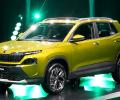
Skoda Auto India, the Czech carmaker that has recently found success with its compact SUV Kylaq, says it remains committed to developing a fully localised electric vehicle (EV). The EV will be manufactured at its Chakan facility for both Indian market and exports.

'While salary increments are moderating compared to last year, not all functions are moving at the same pace.'

Maruti Suzuki Chairman R C Bhargava is pushing for increased government incentives for biogas-powered vehicles over hybrids, emphasising their net-zero carbon emissions and the valuable organic manure they produce, while also advocating for continued GST benefits for electric vehicles.
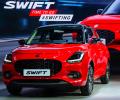
Passenger vehicle sales in India are estimated to have surged by nearly 25 per cent in June 2024, reaching approximately 4 lakh units, with Maruti Suzuki, Tata Motors PV, and Mahindra & Mahindra leading the growth, despite concerns over geopolitical tensions and monsoon impact.

But when it comes to e2W, China is the dominant player and had grabbed over 76 per cent share of total e2W imports in 2025 with brands like Yadea, NIU and Sunra dominating the market.

Indian car buyers care more about affordability than technology, keeping ICE vehicles dominant while hybrids emerge as the preferred transition option and EVs struggle in the mass market.
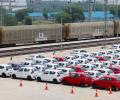
While GST on ICE vehicles was brought down significantly, for electric cars it remained at 5 per cent.

Companies are already diversifying sourcing, raising prices, and reworking operating models as the disruption drags on.

Indian carmakers, including Maruti Suzuki and Kia India, reported robust sales growth in May 2026, with both companies achieving their highest-ever monthly sales despite rising fuel prices. Maruti Suzuki's domestic sales surged to 1,93,535 units, while Kia India recorded 27,586 units, driven by strong demand in mini and compact segments and a shift towards electric and CNG vehicles.

Tata Motors' MD and CEO, Girish Wagh, has identified rising diesel prices as the most significant threat to India's commercial vehicle (CV) industry recovery, despite the sector recently surpassing its pre-FY19 wholesale peak. Diesel costs account for 25-50% of a truck operator's total cost of ownership, making any increase a critical concern for fleet economics.
Retail sales of electric passenger vehicles (ePVs) nearly doubled in July 2025, surging 93 per cent year-on-year (Y-o-Y) to 15,528 units, even as overall passenger vehicle (PV) retail volumes declined marginally. In contrast, electric two-wheeler (e2W) sales dropped by 4.3 per cent to 102,973 units, according to the Federation of Automobile Dealers Associations (Fada) data.

koda Auto Volkswagen India aims to capture a 5 per cent share of India's passenger vehicle market by 2030, driven by new product launches, including alternate fuel vehicles, and a potential entry into the high-volume sub-4 metre SUV segment.
BMW India has outpaced rival Mercedes-Benz India in luxury car registrations for the first quarter of calendar year 2026, driven by new product launches and a growing electric vehicle segment, even as the overall luxury car market remains largely flat.
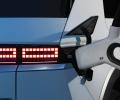
India may see its busiest EV festive season in 2025 with SUVs, luxury cars and scooters set to launch, but rare-earth supply bottlenecks risk delaying rollouts.

Electric vehicle (EV) manufacturers breathed a sigh of relief after the GST Council on Wednesday night retained the concessional 5 per cent rate on EVs, though they now face competition from small petrol and diesel cars, which will attract a lower 18 per cent levy.

Tamil Nadu Governor RV Arlekar announced that the TVK regime, led by Chief Minister C Joseph Vijay, will take steps to ensure fair financial devolution from the Centre, including pursuing the matter in the Supreme Court. The government also plans to conduct a 'Social Justice Survey' and address the state's severe financial deterioration.
The gap in demand for electric vehicles between large and mid-sized cities in the country is shrinking and the Tier-II 2 cities are likely to emerge as the next big demand centre for EVs, a report said on Tuesday. An analysis of the electric two-wheeler and car sales by strategic research provider BloombergNEF (BNEF) from 207 cities across 10 states also suggests that the electric two-wheeler sales in some tier 2 markets have surpassed metropolitans while within tier 2 cities, state capitals generally leading the growth in electric car sales.
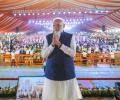
This is the time for India to plan forward fully, with the goal of Atmanirbharata, and energy security. The Persian Gulf is no longer a reliable source, points out Rajeev Srinivasan.

'In all these years of rupee depreciation, of rising oil prices, of inflation caused by import dependence, not one leader had the courage to look the people in the eye and say: Please do this for your country.'

Yamaha expects its first EVs to hit showrooms by the last quarter of FY26 (January - March), once network readiness is complete.

French automotive component maker Valeo on Wednesday said it will invest over Rs 2,150 crore in India and treble its annual sales in the country to around Rs 7,510 crore by 2028.

India's rapidly ageing truck fleet, with 42% of vehicles over 12 years old, is set to trigger a replacement-driven growth of 3-5% annually over the next five years.
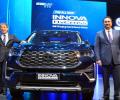
Grant Thornton Bharat's latest survey indicates that hybrids are set to consolidate market share this festive season, bridging the gap between conventional petrol engines and the emerging electric vehicle segment.

India's electric passenger vehicle (ePV) market has expanded sharply over the past five years, with registrations rising from just 3,252 units in 2020 to about 170,000 in 2025. Throughout this scale-up, southern states have remained the bedrock of adoption, consistently contributing around one-third of national electric vehicle (EV) registrations - emphasising the region's role as the structural backbone of India's EV transition.

Brokerage Bernstein has warned Prime Minister Narendra Modi that India risks squandering recent economic gains unless it accelerates structural reforms, particularly in jobs, manufacturing and innovation.

Tesla has launched its second model in India, the three-row six-seater SUV Model YL, priced at Rs 61.99 lakh, while also announcing plans to expand its service and body shop network across major Indian cities. The company is also considering bringing its humanoid robot Optimus and vertically integrated energy solutions business to India at an appropriate time.
Passenger vehicle sales in India reached a record high of 4.7 million units in FY26, boosted by strong performances from major automakers and the implementation of GST 2.0.
